
How Brands Should Think About Video Strategy Before Production
Key Takeaways
Smart brands in Greenwich and across the Northeast define video goals, audiences, and success metrics before hiring a production crew.
Northeast Creative (northeastcreative.us) helps companies in Greenwich, CT build strategy-first corporate and commercial video plans before cameras roll.
Pre-production strategy includes clarifying the brand story, mapping videos to the buyer journey, and aligning stakeholders internally.
A clear distribution and measurement plan (web, social, email, trade shows, internal comms) should be locked in before scriptwriting begins.
Strategy-led video saves budget, reduces reshoots, and results in content that actually moves revenue, awareness, or training outcomes.
Why Strategy Matters Before Video Production
Many Greenwich and NYC-area brands jump straight to “We need a video” without defining why. The result is often expensive content that sits on a website gathering dust, fails to engage the target audience, or misses the mark entirely. This happens more than most companies care to admit, and it almost always traces back to one missing step: strategy.
Northeast Creative approaches every engagement—from a single corporate film to a multi-video campaign—with a strategy workshop phase first. Before any crew is assembled, before locations are scouted, before a single frame is captured, the team works with clients to understand the business context that should drive every creative decision.
Consider the range of business goals that video might serve:
Launching a new financial service in 2026 and needing to build market awareness
Recruiting specialized staff in Fairfield County where competition for talent is fierce
Training a distributed sales team across the Northeast on new products or processes
Raising donor awareness for a Greenwich-based non-profit initiative
Each of these requires fundamentally different content. A recruiting video has nothing in common with a training module beyond the medium itself. Strategy decisions made in the planning phase—around audience, key message, tone, length, and formats—cascade directly into scripting, casting, locations, and budget.
Video strategy also connects to broader marketing, HR, or internal communications plans. When video is treated as an isolated one-off asset, it rarely delivers lasting value. When it’s woven into a larger marketing strategy or training initiative, the final product becomes a powerful way to move business forward.
Define Clear Business Goals for Your Videos
Every project with Northeast Creative starts by defining one primary goal and a small set of secondary objectives. This sounds simple, but it’s the discipline most brands skip—and the reason so many corporate videos underperform.
Common business goals for Greenwich-area companies include:
|
Goal Type |
Example |
Measurable Outcome |
|
Lead Generation |
Increasing qualified leads for a B2B financial advisory firm |
Demo requests, email sign-ups |
|
Employee Onboarding |
Improving training completion rates in 2025 |
Quiz scores, completion percentages |
|
Awareness |
Raising visibility for a local non-profit initiative |
Views, shares, donation page visits |
|
Sales Enablement |
Shortening sales cycles for complex services |
Time to close, proposal acceptance rates |
|
Recruiting |
Attracting talent to Fairfield County offices |
Application starts, quality of candidates |
Each video type should tie directly to a measurable business outcome. A brand film serves different purposes than a product demo or an explainer. Training videos require different success metrics than promotional videos designed to drive conversions.
When you work with a video production company that prioritizes strategy, they’ll use these goals to advise on scope: how many videos, what lengths, and what formats will realistically move the needle. This prevents the common trap of producing a beautiful 4-minute video that no one watches past the first 30 seconds.
Specific, trackable KPIs make all the difference. Rather than “we want more awareness,” aim for “we want 500 demo requests from this landing page video by Q3.” Rather than “better training,” target “90% completion rates with 85% quiz accuracy.” These specifics give both you and your production partner something to build toward.
Know Your Audience and Buyer Journey
Greenwich brands often serve multiple audiences—investors, high-net-worth clients, internal teams, community stakeholders—and each requires different video messaging. A message that resonates with a C-suite decision maker in NYC will fall flat with a potential entry-level hire or a nonprofit donor.
Key Audience Segments to Consider
C-level decision makers in NYC: Need concise, data-backed content that respects their time
Local Greenwich consumers: Respond to community connection and personal service emphasis
Remote employees onboarded post-2020: Require engaging, accessible training that substitutes for in-person connection
Nonprofit donors: Want to see impact stories and emotional connection to the mission
Once you’ve identified your segments, map video content to the buyer or stakeholder journey:
|
Journey Stage |
Content Type |
Purpose |
|
Awareness |
Brand stories, thought leadership |
Introduce who you are and why you matter |
|
Consideration |
Case studies, explainers |
Demonstrate expertise and fit |
|
Decision |
Testimonials, product walk-throughs |
Build confidence to move forward |
|
Post-purchase |
Training videos, support content |
Ensure success and reduce churn |
A practical content map might look like this: a 90-second brand overview for top-of-funnel awareness, a 3-minute product demo for mid-funnel consideration, and 45-second client testimonials for retargeting ads. This isn’t arbitrary—it’s strategic.
Northeast Creative conducts short discovery interviews or surveys with clients’ customers or internal teams to validate assumptions about what audiences actually care about. This knowledge shapes everything from scripting to post production decisions.

Clarify Your Brand Story, Message, and Tone
Strong pre-production strategy aligns every video with the same core brand narrative, regardless of format. Whether you’re producing a flagship brand film or a quick social clip, the story you tell should feel cohesive.
Defining a central brand narrative means answering foundational questions:
Who do you serve in Greenwich and the Northeast?
What problem do you solve for them?
Why is your approach distinct from alternatives?
This becomes the through-line that connects all your video content over time.
Strategic Messaging Elements to Lock Down
Beyond narrative, you’ll need to define specific messaging elements before production begins:
Key value propositions: The 2-3 things that absolutely must come through in every piece
Proof points: Results, dates, case examples that demonstrate credibility
Mandatory phrases or disclaimers: Especially critical for financial services, healthcare, or education brands
Tone should also be defined early. A luxury real estate brand needs cinematic and aspirational content. A financial education company requires direct and authoritative delivery. A non-profit benefits from warm and human storytelling. These aren’t details to figure out on shoot day—they’re strategic decisions that inform casting, locations, music, and editing choices.
Northeast Creative uses brand guidelines—logos, color palettes, typography, visual references—in the strategy phase so that production and motion graphics reinforce existing identity. This level of professionalism ensures consistency across all touchpoints.
Decide on Formats, Channels, and Lengths Before You Shoot
Future distribution determines everything from framing to aspect ratio, so it must be settled before the production schedule is set. Shooting a video in 16:9 only to discover you need vertical content for social media means expensive reshoots or awkward crops.
Primary Channels for Greenwich and Northeast Brands
|
Channel |
Best Use |
Typical Length |
|
Company website |
Brand films, product demos, testimonials |
60-180 seconds |
|
|
Thought leadership, recruiting, B2B awareness |
30-90 seconds |
|
YouTube |
Long-form content, tutorials, documentary-style |
3-10 minutes |
|
Internal LMS |
Training modules, onboarding series |
5-15 minutes per module |
|
Trade shows (4K displays) |
High-impact brand loops |
30-60 second loops |
|
Email campaigns |
Personalized outreach, announcements |
30-60 seconds |
Best-practice lengths vary by channel. Paid social demands 10-30 seconds to capture attention before the skip button. Landing pages work well with 60-120 second explanations. Thought leadership and documentary-style content can extend to 3-6 minutes when the audience is already engaged.
The smart approach is planning multiple deliverables from one shoot: a 2-3 minute flagship video, cutdowns in vertical and square formats, and silent-captioned clips for social feeds where 85% of video is watched without sound.
Northeast Creative builds a “deliverables list” in the strategy phase so the crew captures footage that supports every planned format without requiring extra shoot days. This is where strategy directly translates to budget efficiency.
Plan Content Types Across a Longer-Term Video Roadmap
Smart brands in Greenwich think in terms of 6-12 month video roadmaps instead of one-off projects. A single video might solve an immediate need, but a strategic content library compounds value over time.
Sample 12-Month Video Roadmap
|
Quarter |
Primary Content |
Supporting Assets |
|
Q1 |
Discovery and strategy development |
Brand audit, content plan |
|
Q2 |
Flagship brand film |
Social cutdowns, website hero |
|
Q3 |
Product/service explainer series |
How-to clips, FAQ videos |
|
Q4 |
Customer story collection |
Client testimonials, case study videos |
|
Ongoing |
Short social clips from each production |
Repurposed b-roll, highlights reels |
This approach lets you mix content categories strategically:
Flagship brand storytelling that communicates vision
Product or service explainers that educate prospects
Expert thought-leadership segments that build authority
Recruiting and culture videos that attract talent
Training series that develop teams
Northeast Creative helps clients prioritize which videos to produce first based on the biggest near-term opportunities or bottlenecks. If sales friction is the problem, customer testimonials and product demos take priority. If onboarding is challenging, training videos come first.
A roadmap also lets brands batch production days. Filming three interview subjects on one day costs far less than three separate shoot days. You build a cohesive library of on-brand footage that can be edited and re-edited for future campaigns.
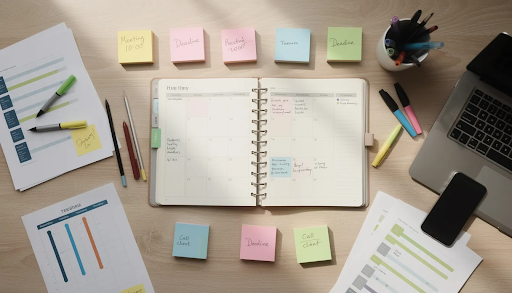
Align Stakeholders and Approvals Upfront
Approvals and compliance—especially in finance, healthcare, or education—can derail timelines if not planned during the strategy phase. Nothing kills momentum like a surprise legal review that adds three weeks to your timeline.
Stakeholders to Identify Early
Marketing leads who own the content strategy
Department heads whose teams will be featured or affected
Legal and compliance teams with review requirements
HR representatives for recruiting or training content
Executive sponsors who need to sign off on big ideas
Define a clear review process with deadlines for each stage:
|
Stage |
Reviewers |
Timeline |
|
Script/concept |
Marketing, executive sponsor |
3-5 business days |
|
Storyboard |
All stakeholders |
3-5 business days |
|
Rough cut |
Marketing, subject matter experts |
5-7 business days |
|
Compliance review |
Legal team |
3-5 business days |
|
Final cut |
Executive approval |
2-3 business days |
For example, a Greenwich-based financial firm might build in a 3-5 day compliance review window for each script and each edit round. Planning for this upfront prevents scrambles later.
Northeast Creative provides structured review templates and online review tools to streamline comments and reduce conflicting notes from multiple reviewers. This process keeps projects on schedule and prevents the confusion that comes from collecting feedback across scattered email threads.
Budget and Scope with Strategy in Mind
A defined strategy lets clients and their production partner make smart trade-offs between scope, speed, and quality. Without strategy, budgets balloon or—worse—get wasted on content that doesn’t serve business needs.
Budget Strategy by Line Item
|
Category |
What It Covers |
Strategy Impact |
|
Concept development |
Creative direction, scripting |
More upfront work reduces revisions later |
|
Pre-production |
Location scouting, casting, scheduling |
Strategic planning consolidates shoot days |
|
Crew size |
Director, DP, audio, assistants |
Scaled to project complexity |
|
Equipment level |
Camera packages, lighting, aerial video rigs |
Matched to distribution requirements |
|
Locations |
Greenwich offices, NYC venues, studio rentals |
Strategy reveals what’s truly needed |
|
Talent |
On-camera subjects, voice-over artists |
Determined by tone and messaging decisions |
|
Post production |
Editing, color, sound, motion graphics |
Deliverables list drives scope |
Pre-production strategy often reveals ways to economize. Filming multiple scripts in a single office location saves location fees. Scheduling interviews back-to-back on one day reduces crew costs. Capturing b-roll that serves multiple videos maximizes every hour of production.
Consider tiered approaches: a lean talking-head plus b-roll style works well for internal training in 2025, while a cinematic multi-location shoot makes sense for a national brand campaign. Each approach has its place—strategy determines which fits your business needs and budget.
Northeast Creative provides transparent proposals that tie each budget line back to strategy. An extra shoot day isn’t a random upsell—it’s justified by the additional planned deliverables that serve documented business goals. Even affordable video blog packages can deliver significant value when planned strategically.
Measure, Learn, and Refine Your Video Strategy
Video strategy is not “set and forget.” The brands that get the most from their investment treat each release as a learning opportunity that informs future content.
Key Metrics to Track
|
Metric |
What It Measures |
Applies To |
|
View-through rate |
How much of the video people watch |
All content |
|
Click-through rate |
Actions taken from video |
Promotional videos, CTAs |
|
Conversion rate |
Completions of desired action |
Landing page videos |
|
Average watch time |
Engagement depth |
Longer content |
|
Training completion |
Learning outcomes |
Training videos |
|
Quiz/assessment scores |
Knowledge retention |
Training videos |
|
Social engagement |
Shares, comments, saves |
Brand awareness content |
Set benchmarks at launch and review results at 30, 60, and 90 days. This cadence gives you enough data to identify what’s working without overreacting to early fluctuations.
Northeast Creative can assist with performance reviews, using real data to inform future scripts, lengths, hooks, and distribution choices. This isn’t guesswork—it’s evidence-based refinement.
A practical example: after launching a 90-second product explainer, you notice 60% of viewers drop off at the 45-second mark. The fix might be trimming the intro, adjusting the hook in the first 5 seconds, or restructuring to front-load the most compelling information. You might also discover that topic-specific videos outperform general overviews, leading you to create a series of focused pieces rather than one comprehensive video.
This iterative approach is the importance of treating video as an ongoing capability rather than a one-time project.
How Northeast Creative Supports Strategy-First Video in Greenwich
Northeast Creative operates as a strategy-led video production company for Greenwich, CT and the broader Northeast region. As one of the leading video production agencies Greenwich businesses trust, they begin every engagement with the understanding that cameras should never roll until goals are clear.
Typical Engagement Flow
Discovery and goal-setting: Understanding business context, challenges, and objectives
Audience and message development: Defining who you’re speaking to and what you need to say
Content roadmap: Planning what to create, in what order, for maximum impact
Production planning: Crew, equipment, locations, and scheduling
Filming: Professional photography and video capture with expertise and the highest standards
Iterative post production: Editing, feedback, refinement until the content serves its purpose
The team handles a range of projects: corporate brand films that capture company vision, training series for growing teams, investor or donor communications that build trust, and event-based content captured at your next event in Greenwich or NYC.
For small businesses with big ideas, Northeast Creative offers video production services scaled to budget and need. For larger organizations, they bring the team and technologies to execute complex, multi-video campaigns across industries.
Being based in Connecticut means Greenwich businesses can have in-person discovery sessions and on-location filming without the complexity of bringing in out-of-area production crews. This accessibility makes collaboration smoother and ensures content captures the authentic character of your business and community.
Video marketing works when it’s built on strategy. Corporate video production succeeds when it serves defined objectives. High quality video content that moves customers to action doesn’t happen by accident—it happens through the careful process of thinking before shooting.
Ready to create video content that actually delivers results? Visit northeastcreative.us to start a strategy conversation before commissioning your next video. The investment in upfront planning will demonstrate its value in every frame of your final product.
FAQ
How early should my company start thinking about video strategy?
Strategy work ideally begins 8-12 weeks before a major campaign launch. This timeline allows for proper discovery sessions, messaging development, scripting, internal approvals, and pre-production planning before any filming occurs. Rushing this phase is how brands end up with content that misses the mark. For simpler projects like a single testimonial video, 4-6 weeks may suffice, but more ambitious campaigns benefit from the full timeline.
Can smaller Greenwich businesses benefit from strategy-first video, or is it just for large brands?
Even small and mid-sized companies gain significant value from a focused strategy. In fact, businesses with limited budgets have even more reason to plan carefully—there’s less margin for error. A strategy-first approach ensures your investment goes toward the single most impactful video asset first, rather than spreading resources thin across content that doesn’t serve clear objectives. Northeast Creative works with organizations of all sizes to match production scope to business needs.
What if we already shot footage but don’t have a clear strategy?
Northeast Creative can audit existing footage, align it with clarified goals and audiences, and recommend edits, cutdowns, or targeted reshoots to create a more strategic suite of videos. Sometimes excellent footage just needs better structure in the edit or repurposing for different channels. In other cases, capturing additional interviews or b-roll can transform unfocused content into a cohesive story that serves your business.
How many videos should be in our initial plan?
Start with a small but intentional set. A common starting point is one core brand piece (60-90 seconds), one product or service explainer (2-3 minutes), and one testimonial featuring a satisfied client (60-90 seconds). This trio covers awareness, education, and social proof—the fundamentals of most marketing funnels. Expand from there as results and budget allow, using performance data to guide priorities.
Do we need an internal marketing team to work with Northeast Creative?
While an internal marketing team certainly helps streamline communication and approvals, it’s not required. Northeast Creative regularly partners directly with founders, executive directors, operations leaders, or anyone responsible for moving the business forward. The strategy process includes guidance on what decisions you’ll need to make and when, so even lean organizations can produce effective video content without a dedicated marketing department.